
By Karen Bartlett and Amna Khwaja
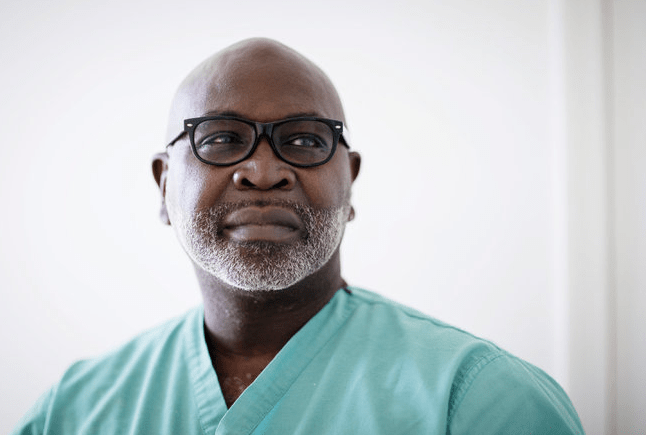
Willie Parker knows how to dismember a foetus with cool precision. Perhaps it has to be that way if you are one of the last abortionists in the American south, and your predecessor was murdered. Riding a raging torrent of hatred thrown at you by pro-lifers, and negotiating the slew of new state laws designed to make abortion in the US nigh on impossible has made more nervy doctors quit in terror. Maybe a calm medical disposition, and a Christian certainty that you are carrying out God’s calling to serve the women of America, is all that can get you through.
“After becoming a gynaecologist and obstetrician I was sympathetic to the fact that women had unplanned and unwanted pregnancies, but I was unable to provide that care because I was morally conflicted. I never questioned a woman’s right to do so – but for the first 12 years of my practice I didn’t have a lot of abortion care,” Parker explains. It was only when listening to Martin Luther King’s final sermon about the good Samaritan, that Parker suddenly realised his life’s mission. What would happen, he asked himself, if he didn’t stop to help the person who needed him; if he remained just another person who passed by. “I became morally convinced that it was not a conflict of my Christian beliefs to provide abortion care, and in fact it became unethical to me not to do so.” It was his “Come to Jesus” moment.
Although abortion raises its thorny head in every election cycle, Parker believes the determined efforts to introduce an ever-multiplying number of state laws is an insidious effort to clamp down on women’s rights, in much the same way as Black Americans were disenfranchised and oppressed for centuries. Growing up in poverty in Birmingham, Alabama in the 1960s and 1970s Parker says he is “well versed” in the ways of racism and patriarchy. There has never been a time in world history when women did not have to fight for control of their reproductive and human rights, he says. “My specific task, given that I was born in the United States at a time where women’s reproductive rights are contested, is to stay true to the work of working to secure those rights – and then providing those services once we’ve secured rights for them to be available.”
That task is getting harder. In 2012 Parker left his lucrative and successful practice and academic appointment at the University of Hawaii, and began commuting back and forth from Chicago to the south where he was one of only two doctors serving women who made their way to the evocatively named ‘Pink House’ abortion clinic in Jackson, Mississippi (painted bright pink because its owner refused to be ashamed of what she did) Now Parker has fully returned to his roots, moving back to Alabama, and working with two other doctors on an ‘abortion circuit’ across two states – working where they are still permitted. In the four years since he began his work, America is edging ever closer to an outright ban on abortion. In the first months of this year the state legislature of Oklahoma voted in favour of an outright ban on abortion, and making performing an abortion a felony punishable by three years in prison (the law was vetoed by pro-life Governor Mary Fallin who claimed it would be impossible to uphold in the courts), the South Carolina legislature became the 17th state to prohibit abortion after 19 weeks, and Utah passed a law requiring doctors to give a foetus anaesthesia in the womb. The purpose of such restrictions are, in the words of South Carolina Representative Wendy Nanney, to “get rid of abortion altogether,” something Willie Parker is well aware of in his work where the majority of his time is making sure he complies with onerous, and medically pointless, government regulations.
In may the Governor of Alabama signed into law a bill that regulates abortion providers like sex offenders, mandating that they must be kept a certain distance away from schools (as if girls would flock there like to a sweet shop) – and effectively closing down two out of the three remaining clinics in the state. Another law banned the use of dilation and evacuation (D&E), the most common medical procedure for second trimester abortions, while a 48 hour waiting period is already in place.
“They make it so complicated to access as to be virtually impossible by having waiting periods, mandatory parental notification for teens, no use of federal funds, regulating various health and nursing requirements, targeted regulation of abortion providers, regulating how large clinics always have to be, how many bathrooms you have to have, how many nurses you have to have per how many patients. All of these things that have nothing to do with the safety or the quality of abortion, but yet they become in many places insurmountable barriers that functionally cause clinics to close and limit access to abortion for women,” Parker says.
Some of the hurdles Parker must help women overcome include showing them an ultrasound and identifying the baby’s body parts, and imparting what he believes is a medically indefensible warning that having an abortion increases the risk of breast cancer. “Having an abortion is less risky to a women’s health than having a baby,” he says.
Above all, of course, it is poor women who suffer the most. Well-off women will always be able to find a private doctor who can tell them how to get around the regulations, Parker says, but it’s the poor women he meets who are struggling to pay for abortions now that federal funding has been cut-off, or who can’t fund long trips to distant clinics, or stay overnight to see out the 48 hour waiting period. And poor is something that Willie Parker understands.
Now 52-year old Parker is nattily dressed in a smart suit, with a perfectly folded pocket handkerchief and a gold hoop earing, but once he one of six children who grew up with a single mother, living in his grandfather’s unpainted weatherboard house out on the city limits. His chores included feeding the pigs that sustained the family, and he “lived in church” which gave him solace. “We were poor. We had food assistance, we had medical assistance.” Being poor was stigmatised, being black was stigmatised – “religion was hope.” When the local pastor recognised his intelligence and talents Parker became a boy-wonder preacher, delivering sermons at seventeen – but it was medicine, not the church, that was his true calling.
Eventually, he became the only member of his family to go to college, graduating from medical school, before going on to study at Harvard. “I’m not the brightest person who ever came from my community, but I am one who, with a modicum of opportunity, took advantage of it. And that was, it part, related to people in positions of authority being people with great will. Most of my teachers were white. Most of them were southern reared. So they were reared in the same racial setting, and yet these people were teachers who were teaching black children first and foremost as human beings. Our race was very secondary.”
Although single and teenage mothers were prevalent, the concept of abortion did not feature in his childhood, Parker says. Experiencing the support of his white teachers would pervade his thinking, however, and influence his eventual choice to become an abortion provider. Humanity, he came to understand, exists in shades of grey.
In Alabama 60% of women live in a county with no access to an abortion clinic, and 60% of the women who get abortions are poor and black. Parker sees them all. He sees the woman who tells him she can’t have a baby because she just got a promotion at work – and then cries when he asks her if she wants know know if she is having more than one baby (the ultrasound reveals triplets). He sees the stripper who can’t wear a sanitary pad to work, the scared teenage girl with her mother, the lesbian who has “fallen off the wagon” as he puts it, and the woman whose husband has just committed suicide in front of his family, and can’t face bringing another child into the world. His work is a sad business, no matter how much care Parker uses in choosing the words to describe it.
The end result of “pregnancy disruption,” can involve tiny hands, small body parts, sometimes recognisable eyes. Parker must scrutinise them all. This is the reality, he tells a previous reporter, in ensuring that the procedure has been performed safely and successfully, and the woman’s womb is empty.
“Even if you call the intentional disruption of a pregnancy ‘killing’ it’s still not murder,” Parker says. “By custom, by science and by law foetuses are not people, therefore you can’t murder somebody who’s not a person. Not to be flippant or dismissive about it, a foetus is not a person, just like an acorn is not an oak tree. We set new thresholds about when a person is beginning at birth. A foetus is a reproductive process occurring in a woman’s body – and her agency in the context of her person allows her to make that decision.” Parkers seems unwilling to set an absolute cut-off for abortion term limits, saying he would need to address each woman on a case-by-case basis, but eventually offers, “The line for me is the point of viability when a foetus can survive outside the womb, and we know that’s right about 25 weeks. I draw the line there in terms of where I personally am willing to work in my own ethical framework.”
Such verbal contortions can make the procedure sound distant – but perhaps not distant enough to live completely comfortably with. For many years Parker wrestled with whether to provide abortion services – now he sees his duty as supporting women’s reproductive rights. It’s a decision that has not bene without consequences. When Parker moved home permanently to Alabama two years ago he had to tell his family for the first time what he actually did for a living – and those were not easy discussions. For a man who was once a Christian preacher, he no longer goes to church, saying he finds it difficult to find faith communities that respect a woman’s right to choose: “I rest consoled that there are many ways to understand a religious tradition.” Security is an issue, but he does not have a family of his own to worry about, and refuses to wear a bullet proof vest.
Yet the time is coming near, he understands, when he may no longer be able to carry out his work. “When I was growing up the older women would say – in times like these, there’s always been times like these. Which is to say there will never be a day when women won’t have to contest opposition for their basic fundamental rights as women. And so if we win today, the opponents are going to regroup and they’re coming back tomorrow. If we lose today we are going to embrace the legitimacy of our cause and we’re going to keep fighting for those rights. So I don’t ride the rollercoaster of what’s going to happen. Is there ever going to be a day when I’m not committed to fundamental rights and justice? The answer is no.”
It’s conceivable, however, that answer could take him all the way to prison – where he could no longer serve anyone.
“I would continue to fight. I would probably embrace a public health construct of harm reduction. And I’d have to figure out what that means. That certainly means that I would be willing to give women information about how to safely end the pregnancy. And then if that knowledge itself becomes contested I’d have to deal with that. But I couldn’t see myself not figuring out a way to help women to secure their health and safety.”
It would be the same as abolitionists working under the system of slavery. “The abolitionists fought to overthrow, to make slavery illegal. But at night they provided respite for folk who were fleeing slavery. My work would have to be akin to abolitionists. I’d have to figure out a way to circumvent the system. You can’t provide services if you’re incarcerated, so I’d have to figure out a way to outsmart the system. And I would be certainly willing to do that.”
 thelondonsmog